ENTJ in SBTI: What the 'Commander' Is Really Like in Practice
The ENTJ Commander: Myth vs. Reality
The ENTJ, or the Commander, is one of the sixteen personality types identified by the Myers-Briggs Type Indicator (MBTI) [1]. Often depicted as natural-born leaders, strategic thinkers, and decisive individuals, ENTJs are said to possess an innate ability to organize, plan, and execute complex projects with unwavering determination. They are the architects of change, the visionaries who see the bigger picture and rally others to their cause. This portrayal paints a picture of almost superhuman efficiency and charisma, a leader who is always in control and always right. But how much of this is a carefully constructed ideal, and how much reflects the messy, often contradictory reality of human behavior?
While the MBTI framework suggests that ENTJs are driven by Extraverted Thinking (Te) and supported by Introverted Intuition (Ni), leading to their characteristic goal-oriented and future-focused approach, this description can sometimes feel more aspirational than observational. In practice, the relentless pursuit of efficiency can sometimes manifest as impatience, a lack of empathy for those who don't keep up, or an inability to delegate effectively. The desire for control, while often productive, can also lead to micromanagement [6] or an authoritarian style that stifles creativity and initiative in others. The myth of the flawless commander often overlooks the very human struggles with emotional intelligence [5], interpersonal dynamics [12], and the occasional blind spot that even the most strategic minds possess. The reality is that even the most commanding ENTJ is still a complex individual, navigating the world with a mix of strengths and weaknesses that are far more nuanced than a simple four-letter code can convey.
What MBTI Gets Right (and Wrong) About ENTJs
MBTI's strengths lie in providing a common language for self-understanding and team dynamics. For ENTJs, it accurately highlights their drive for leadership [4], their strategic foresight [11], and their ability to make tough decisions. The framework correctly identifies their preference for logic and objective analysis over emotional considerations, which often makes them highly effective in business and organizational settings [10]. Their natural inclination to take charge and their comfort with long-term planning are undeniable traits that many ENTJs recognize in themselves. The emphasis on their extraverted nature [2] also rings true, as ENTJs often thrive in environments where they can interact, influence, and direct others.
However, the MBTI framework, with its focus on inherent preferences, often falls short in describing the behavioral manifestations and potential pitfalls of these traits. It tends to present personality types in an overly positive light, emphasizing strengths while downplaying or omitting the less flattering aspects. For ENTJs, this means the MBTI might gloss over their potential for arrogance, their insensitivity to others' feelings, or their tendency to become overly critical and demanding. The framework doesn't adequately address how these traits might be perceived by others or how they can impact relationships and team morale. It describes the ideal ENTJ but rarely delves into the practical implications of their dominant functions in real-world scenarios. It also doesn't provide a clear mechanism for understanding how an ENTJ might adapt or struggle in different social contexts, which is where a behavioral-focused system like SBTI can offer a more grounded perspective.
ENTJ Mapped to SBTI: Most Likely Types
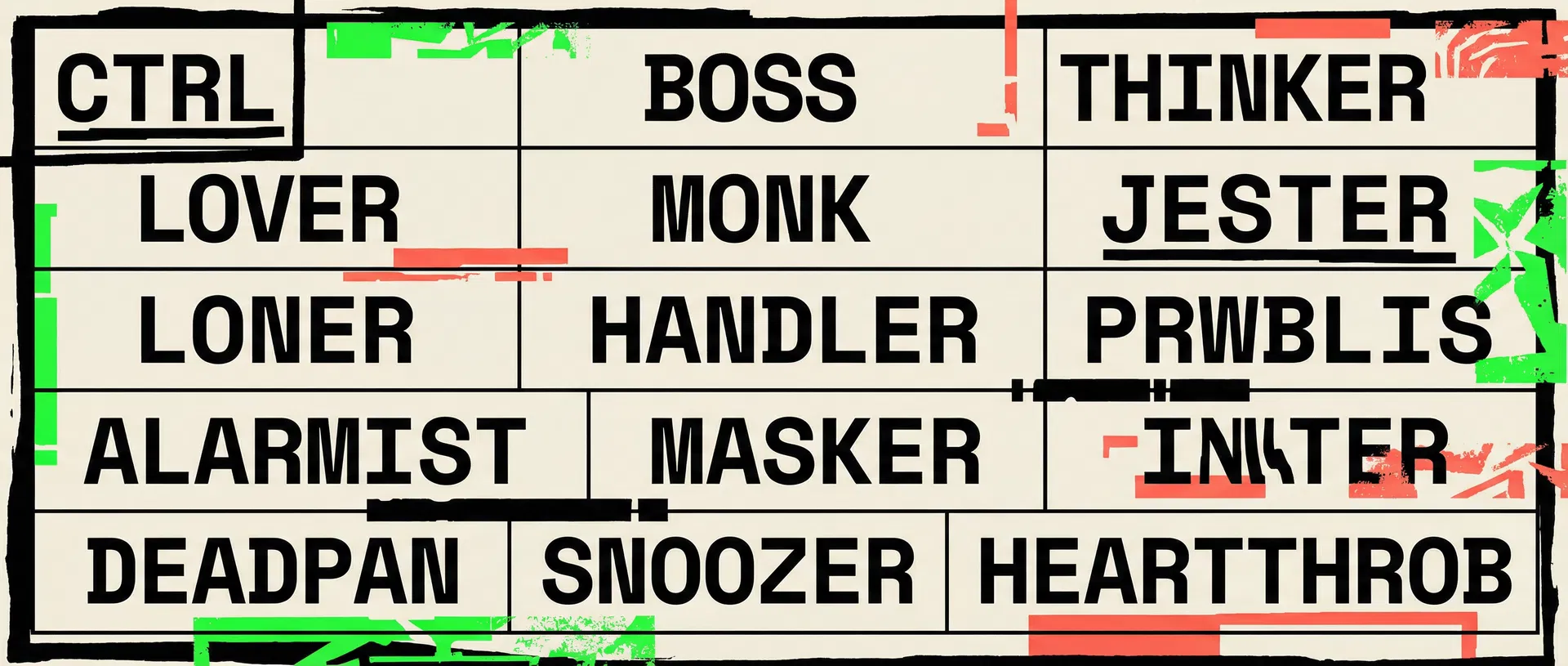
When attempting to map the MBTI ENTJ to the SBTI framework, it's crucial to remember that the two systems operate on fundamentally different principles. MBTI focuses on cognitive preferences [9], while SBTI analyzes observable behaviors [8]. However, by examining the core behavioral patterns often associated with ENTJs, we can identify several SBTI types that frequently align with the ENTJ profile. The key is to look beyond the self-perception and consider how these individuals act in various situations.
The BOSS: The Quintessential Leader
The BOSS type in SBTI is perhaps the most direct equivalent to the stereotypical ENTJ. BOSS individuals are characterized by their assertiveness, their unwavering drive to lead, and their results-oriented approach. They are often found at the helm of projects, teams, or organizations, dictating direction and expecting efficiency. Like ENTJs, BOSS types are not afraid to make tough decisions and can be highly effective in achieving their goals. They thrive on control and often possess a natural charisma that draws others to follow their lead. However, this can also manifest as a tendency to dominate conversations, dismiss dissenting opinions, and prioritize outcomes over interpersonal harmony. The BOSS is the person who will push boundaries, challenge the status quo, and ensure that things get done, often with little regard for emotional niceties.
The CTRL: The Master of Control
While similar to the BOSS, the CTRL type in SBTI emphasizes the need for control and meticulous planning. ENTJs, with their dominant Extraverted Thinking (Te), often exhibit a strong desire to organize their external environment and ensure that processes are efficient and predictable. CTRL individuals embody this trait, often becoming deeply involved in the details of execution, not just the overarching strategy. They are the ones who will create elaborate systems, enforce strict rules, and ensure that every variable is accounted for. This can be a tremendous asset in complex projects, but it can also lead to micromanagement [6], inflexibility, and a reluctance to delegate. A CTRL type, much like an ENTJ, believes that if they are not in control, things will inevitably go awry. Their focus is on preventing chaos and maintaining order, sometimes to the point of stifling spontaneity or creative freedom.
The ATM-ER: The Resource Maximizer
The ATM-ER (short for 'Automated Teller Machine' or 'All-Time Maximizer') in SBTI represents a type that is highly focused on resource allocation [16], efficiency, and maximizing output. While not directly about leadership, this behavioral pattern is often a strong underlying current in many ENTJs. Their strategic thinking and goal-oriented nature often translate into a relentless pursuit of optimal resource utilization – be it time, money, or human capital. ATM-ERs are constantly looking for ways to streamline processes, eliminate waste, and achieve the greatest possible return on investment. This can make them incredibly valuable in any organization, but it can also lead to a utilitarian view of people [17], where individuals are seen primarily as resources to be managed rather than as complex beings with their own needs and aspirations. An ATM-ER, like an ENTJ, is driven by the desire to make things work better, faster, and more profitably.
The ENTJ's Blind Spots That MBTI Glosses Over
While MBTI offers a comforting framework for self-understanding, its inherent positivity often leads to a glossing over of crucial blind spots that can hinder an individual's growth and effectiveness. For the ENTJ, these blind spots are particularly significant given their powerful and often dominant nature. The MBTI's emphasis on their strengths can inadvertently reinforce a sense of infallibility, making it harder for ENTJs to recognize and address their weaknesses.
One major blind spot is the potential for interpersonal insensitivity [12]. ENTJs, driven by logic and efficiency, can sometimes overlook or dismiss the emotional needs and perspectives of others. Their direct communication style, while efficient, can be perceived as harsh or uncaring, leading to strained relationships and decreased team morale. The MBTI might describe this as a preference for thinking over feeling, but it rarely delves into the consequences of such a preference in real-world interactions. This can lead to ENTJs inadvertently alienating allies or failing to inspire loyalty, mistaking compliance for genuine buy-in.
Another significant blind spot is the potential for micromanagement [6] and a lack of trust in others. While ENTJs are excellent strategists, their desire for control can lead them to struggle with delegation, believing that only they can execute tasks to their exacting standards. This not only burdens them with excessive workload but also stifles the growth and initiative of their team members. The MBTI might frame this as a strong judging preference, but it doesn't adequately highlight how this can impede team development and create bottlenecks. The MBTI often presents the ENTJ as a visionary leader, but it rarely explores the practical challenges of leading when one struggles to empower others.
Furthermore, ENTJs can sometimes exhibit overconfidence and an unwillingness to admit mistakes. Their strong convictions and decisive nature, while often admirable, can make them resistant to feedback or alternative viewpoints. This can lead to them doubling down on flawed strategies or missing critical information that contradicts their initial assessment. The MBTI describes their intuition and thinking functions as powerful tools for strategic planning, but it doesn't caution against the hubris that can accompany such intellectual prowess. This blind spot can be particularly damaging in rapidly changing environments where adaptability [20] and humility are paramount. The MBTI, by focusing on inherent preferences, often fails to provide a mirror that reflects these less flattering, yet crucial, aspects of the ENTJ personality, leaving individuals to discover these pitfalls through costly real-world experiences.
ENTJ vs BOSS: A Direct Comparison
While the MBTI ENTJ and the SBTI BOSS share significant overlaps in their outward presentation, a deeper dive reveals crucial distinctions that highlight the different philosophies of their respective frameworks. Both types are characterized by their leadership qualities [4], decisiveness, and results-orientation. An ENTJ, with their dominant Extraverted Thinking (Te), naturally seeks to organize and direct the external world, much like a BOSS who takes charge and ensures tasks are completed efficiently. Both are often found in positions of authority, driving initiatives and setting ambitious goals.
However, the fundamental difference lies in the lens through which they are defined. The ENTJ is described by cognitive preferences [9] – how they perceive and process information. Their leadership stems from an internal drive to implement their strategic visions. The BOSS, on the other hand, is defined purely by observable behavior [8]. A BOSS acts like a leader, demands results, and exerts control, regardless of their internal cognitive processes. This distinction is critical: an ENTJ might think like a leader, but a BOSS behaves like one. This means that while many ENTJs might exhibit BOSS-like behaviors, not every BOSS is necessarily an ENTJ, and not every ENTJ consistently acts as a BOSS.
For instance, an ENTJ might be highly strategic and visionary, but if they are in an environment where their leadership is not accepted or they lack the authority to implement their plans, their BOSS-like behaviors might be suppressed. Conversely, an individual who is not an ENTJ by MBTI standards could still be a BOSS if their observable actions consistently demonstrate strong leadership, assertiveness, and a drive for control. The SBTI BOSS is a more pragmatic and less idealized description, focusing on the impact an individual has on their environment rather than their internal mental architecture. This behavioral focus allows for a more honest assessment of how an individual operates in practice, stripping away the theoretical underpinnings to reveal the raw, unvarnished reality of their leadership style. The BOSS doesn't just think they're in charge; they are in charge, and their actions leave no room for doubt.
Why SBTI Gives ENTJs a More Honest Mirror
The allure of MBTI lies in its ability to provide a seemingly positive and affirming self-identity. For ENTJs, this often translates into a self-perception of being a powerful, strategic, and effective leader. While this can be empowering, it can also create a distorted self-image, where the less desirable aspects of their behavior are rationalized or ignored. The SBTI, with its focus on observable behaviors [8] and its unapologetically direct naming conventions, offers a far more honest and unflinching mirror for the ENTJ.
SBTI doesn't sugarcoat. When an ENTJ exhibits controlling tendencies, the SBTI might label them a CTRL. When their relentless pursuit of efficiency borders on exploitation of resources, they might be identified as an ATM-ER. And when their leadership style becomes overbearing, they are simply a BOSS. These labels, while potentially jarring, force a confrontation with reality. They don't delve into the why behind the behavior in terms of cognitive functions, but rather highlight the what – the actual impact of their actions on others and their environment. This behavioral feedback is invaluable for genuine self-improvement [19]. [1]
Consider the ENTJ who believes they are merely being "efficient" when they are actually micromanaging [6]. The MBTI might validate their need for structure, but the SBTI's CTRL label forces them to confront the reality of their behavior. This directness is what makes SBTI a powerful tool for personal growth. It strips away the theoretical justifications and presents the individual with the unvarnished truth of their actions. For the ENTJ, who often values objective reality and practical results, this behavioral feedback is far more actionable than the abstract concepts of cognitive functions. The SBTI provides a clear, unambiguous reflection of their impact, allowing them to make concrete changes to their behavior rather than relying on the comforting, yet potentially misleading, self-image provided by the MBTI.
Frequently Asked Questions
1. Can an ENTJ be a FUCK or a DEAD in SBTI?
While it might seem contradictory to the stereotypical driven nature of an ENTJ, it is entirely possible for them to exhibit behaviors associated with the FUCK (摆烂王) or DEAD (行尸走肉) types in SBTI. This usually occurs when an ENTJ is experiencing severe burnout [14], a significant loss of control, or a profound sense of failure. When their strategic plans collapse or they find themselves in an environment where their leadership is consistently thwarted, they may retreat into apathy [15] or disengagement as a coping mechanism. The SBTI captures this behavioral shift, highlighting that even the most commanding personalities can succumb to periods of extreme passivity when their core drives are frustrated. This is a critical distinction from MBTI, which tends to present personality as a static set of preferences. SBTI, by focusing on behavior, acknowledges that even the most ambitious and energetic individuals can hit a wall. An ENTJ who has poured their heart and soul into a project that ultimately fails may find themselves in a state of profound disillusionment, leading to behaviors that are completely at odds with their typical commanding presence. This is not a change in their core personality, but rather a behavioral response to extreme circumstances. The SBTI framework allows for this level of nuance, providing a more realistic and compassionate understanding of human behavior in all its complexities.
2. How does the BOSS type differ from the CTRL type for an ENTJ?
For an ENTJ, the distinction between a BOSS and a CTRL lies in the focus of their behavior and the scope of their influence. A BOSS is primarily concerned with leadership, direction, and achieving overarching goals. They are the visionaries who rally the troops, set the strategic course, and drive the project forward with a clear focus on the ultimate outcome. Their authority is often broad, encompassing the entire scope of an endeavor. A CTRL, on the other hand, is more focused on the meticulous management of processes and details. They are the ones who design and implement the systems, enforce the rules, and ensure that every variable is accounted for with precision. Their influence is often more granular, ensuring operational excellence. While an ENTJ can exhibit both sets of behaviors, they may lean more towards one or the other depending on the specific demands of the situation and their personal inclinations. For example, an ENTJ in a CEO role might primarily operate as a BOSS, delegating operational specifics, while an ENTJ managing a complex engineering project might exhibit more CTRL tendencies to ensure technical accuracy and adherence to protocols. Both are driven by a desire for order and efficiency, but their methods and areas of concentration differ significantly.
3. Is the ATM-ER type a negative label for an ENTJ?
The ATM-ER (提款机) label in SBTI is not inherently negative, but it does highlight a specific behavioral pattern that can have both positive and negative consequences. For an ENTJ, being an ATM-ER means they are highly focused on resource allocation, efficiency, and maximizing output. This can make them incredibly valuable in business and organizational settings, as they are adept at streamlining processes, identifying bottlenecks, and achieving optimal results with minimal waste. Their ability to see people, time, and capital as resources to be strategically deployed is a significant asset in achieving ambitious goals. However, this intense focus on optimization can also lead to a utilitarian view of people [17], where individuals are seen primarily as resources to be managed rather than as complex beings with their own needs, feelings, and aspirations. This can manifest as a lack of consideration for individual well-being, an overemphasis on productivity metrics, or a tendency to depersonalize interactions. The label serves as a crucial reminder for ENTJs to balance their powerful drive for efficiency and results with empathy [13], interpersonal awareness [7], and a recognition of the human element in all endeavors. It encourages a more holistic approach to leadership and management, ensuring that their pursuit of maximum output does not come at the expense of human dignity or team morale.
4. Why does SBTI use such direct and sometimes harsh names for its types?
SBTI intentionally uses direct and sometimes harsh names for its types to cut through the self-deception [18] and rationalization that often accompany traditional personality assessments. The goal is to provide an unflinching mirror of an individual's observable behavior [8], rather than a comforting, often idealized description of their internal cognitive preferences [9]. By using labels like BOSS, CTRL, or ATM-ER, SBTI forces individuals to confront the reality of their actions and the tangible impact they have on others and their environment. This directness is designed to provoke genuine self-reflection and foster personal growth [19], rather than simply validating a pre-existing, often inflated, self-image. The names are deliberately chosen to be memorable and to immediately convey the core behavioral pattern, stripping away euphemisms and academic jargon. This approach ensures that individuals receive clear, unambiguous feedback, which is crucial for those who truly seek to understand and modify their behavior for the better. It challenges the notion that personality is merely an internal construct and emphasizes the external, observable manifestations that truly define how one interacts with the world. This stark honesty is a core tenet of SBTI, aiming to provide a more actionable and less abstract understanding of one's behavioral footprint.
5. Can an ENTJ change their SBTI type over time?
Yes, an ENTJ can absolutely change their SBTI type over time. This is a fundamental difference from MBTI, which often implies a fixed personality type. Because SBTI is based on observable behavior [8] rather than inherent cognitive preferences [9], an individual's type can and often does shift as they adapt to new environments [20], learn new skills, or undergo significant life changes. For example, an ENTJ who starts out as a rigid CTRL, meticulously managing every detail and struggling with delegation, might evolve into a more flexible and empowering BOSS as they gain experience, develop their emotional intelligence [5], and learn to trust their team. This evolution is not about changing who they fundamentally are, but rather about refining their behavioral patterns and leadership style in response to feedback and growth. The SBTI framework recognizes that behavior is dynamic and context-dependent, allowing for a more nuanced and realistic understanding of personality development. It encourages individuals to view their type not as a destiny, but as a current snapshot of their behavioral tendencies, with ample room for conscious development and adaptation. This offers a powerful pathway for ENTJs to address their blind spots and cultivate more effective and empathetic ways of interacting with the world.
References
[1] Myers-Briggs Type Indicator [2] Extraversion and introversion [3] Personality psychology [4] Leadership [5] Emotional intelligence [6] Micromanagement [7] Self-awareness [8] Behavioral psychology [9] Cognitive psychology [10] Organizational behavior [11] Strategic management [12] Interpersonal communication [13] Empathy [14] Burnout (psychology) [15] Apathy [16] Resource allocation [17] Utilitarianism [18] Self-deception [19] Personal development [20] Adaptability

The Goofball (HHHH) SBTI Personality Type: Embracing the Wonderfully Weird
Discover the HHHH "Goofball" SBTI personality type, a certificate of genuine originality for those too wonderfully weird to categorize.

The Mom Friend (MUM) SBTI Personality Type: The Unsung Healer
The MUM personality type embodies unparalleled emotional intuition and a profound drive to nurture, often at the cost of their own well-being, making them the silent anchors in any social circle.

BOSS (BOSS) SBTI Personality Type: The Natural Leader Who Takes the Wheel
Discover the BOSS SBTI personality type, the natural leader who takes charge, drives action, and commands respect with unshakeable confidence.